Precision Dry Ice Cleaning Announces Mobile Dry Ice Blasting in Four States
On-site dry ice blasting serves industrial equipment, molds, vehicles and marine applications in New York, New Jersey,
Press Release Disclaimer: This is a press release distributed through the XPR Media network. It has not been independently verified by our newsroom.
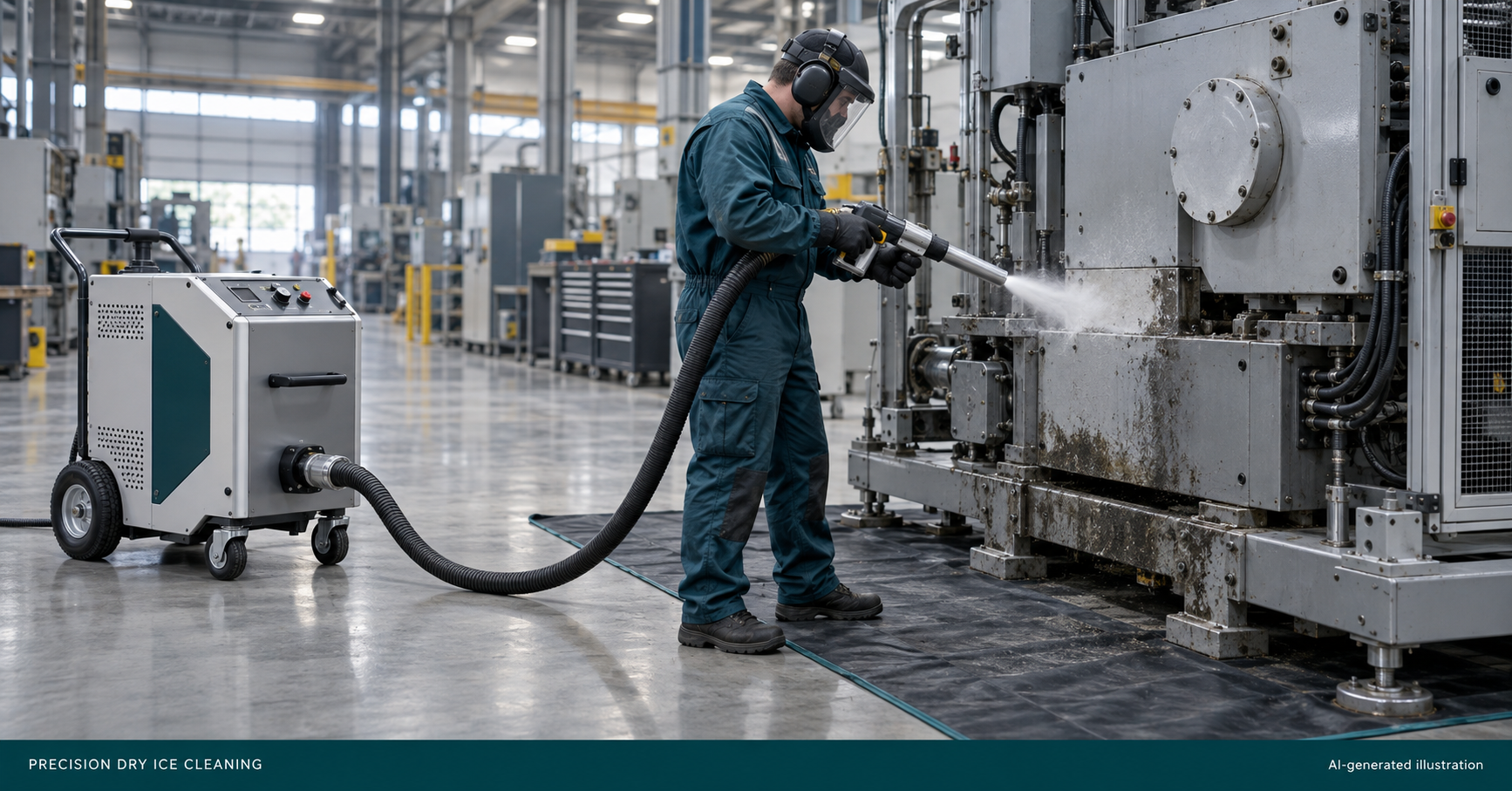

On-site dry ice blasting serves industrial equipment, molds, vehicles and marine applications in New York, New Jersey, Pennsylvania and Delaware.
KEANSBURG, NJ, UNITED STATES, September 21, 2026 /EINPresswire.com/ — Precision Dry Ice Cleaning announces the availability of mobile dry ice blasting services for businesses, municipalities and private owners across New York, New Jersey, Pennsylvania and Delaware. Based in Keansburg, New Jersey, and operating under Tri-State Laser Cleaning LLC, the business provides on-site cleaning for industrial machinery, production tooling, printing equipment, building elements, vehicles and marine applications.
The service brings dry ice blasting to the equipment location, with one-time projects, planned shutdown support and recurring maintenance options. The company’s industrial services focus on selected grease, oil, ink, adhesives, release agents and production deposits that need removal before inspection, maintenance or other work.
For manufacturers and maintenance teams, the potential value extends beyond appearance. On suitable equipment, dry ice blasting can provide access to cleaner surfaces for inspection, limit unnecessary dismantling and avoid introducing water or persistent abrasive blasting media into the cleaning area. Those advantages depend on the asset, the deposit and the conditions under which the work is performed.
How dry ice blasting fits industrial maintenance
Dry ice blasting uses compressed air to direct solid carbon dioxide particles toward the surface being cleaned. Particle impact, cooling and the transition from solid to gas contribute to loosening suitable contamination. The dry ice becomes gas rather than leaving spent sand, grit or another persistent blasting medium around the equipment.
This provides an option for cleaning applications where additional water, liquid cleaning agents or abrasive grit are undesirable. Accessible equipment surfaces may be cleaned while the asset remains installed, subject to the access and preparation required for the particular machine.
The removed contamination still requires collection. Dry ice cleaning does not make oil, ink, adhesive or other deposits disappear, and the work plan accounts for the material being removed as well as nearby equipment and operations.
Industrial machinery, molds and production tooling
Precision Dry Ice Cleaning reviews machinery housings, frames, guards and accessible production surfaces for removal of suitable process buildup. Cleaning can form part of an inspection or maintenance work order, with the target areas and desired condition identified before work begins.
For injection molding and rubber production, services address selected release-agent and production deposits on tooling. Applications can include accessible cavities, vents, parting lines and detailed mold features. The mold material, surface finish, coating, residue and toolmaker’s requirements guide the cleaning approach.
Where access and equipment conditions allow, a mold may remain in the press during cleaning. Other applications require removal of guards, covers or the tool itself. A representative test provides a way to evaluate the actual deposit and finish before extending the work to a larger area or additional tools.
Cleaning is coordinated with the facility’s own maintenance and quality procedures. Tool repair, dimensional inspection and finished-part checks remain separate activities, allowing the cleaning objective to stay focused on the deposits and surfaces identified for the project.
Printing, packaging and food-production equipment
Printing applications include selected ink, grease and production residue on accessible press components. Precision Dry Ice Cleaning separates general press-frame cleaning from work involving precision rollers, where manufacturer guidance and component-specific inspection criteria matter.
Packaging and converting operations can discuss adhesive and process-residue cleaning alongside related machinery maintenance. The scope can focus on a particular deposit, equipment group or production area available during a planned cleaning window.
Food-processing and bakery equipment are also reviewed for suitable production buildup. These projects are coordinated with the facility’s hygiene procedures and equipment-release requirements. Deposit removal supports a defined cleaning task; sanitation, allergen-control and microbiological verification remain part of the facility’s separate procedures.
Cleaning around planned shutdowns
The company’s plant shutdown cleaning services connect cleaning work to the maintenance schedule. An outage may involve equipment release, guard removal, cleaning, inspection, repair and reassembly within a limited window. The proposed cleaning sequence identifies when an asset becomes accessible and when it must be handed to the next team.
Dry ice blasting can be useful where avoidable teardown or additional cleanup would consume that window. Because the dry ice leaves no persistent blasting grit, the collection plan can focus on the contamination removed and the protection needed around the work area.
For unfamiliar deposits or equipment, a test before the shutdown can establish practical information about cleaning response, access, preparation and time requirements. Those observations provide a basis for planning the larger task.
Some work may fit an off-shift, changeover or separate maintenance visit rather than the main outage. Precision Dry Ice Cleaning reviews those opportunities with the equipment owner, including availability, isolation, ventilation, compressed air and nearby operations.
Recurring cleaning based on actual equipment conditions
Recurring maintenance services begin with a defined asset list and a baseline condition. The first cleaning or test identifies the surfaces, deposits and inspection points that will be used to evaluate repeat work.
Intervals are developed around observed buildup and operating conditions. Production materials, release agents, shift patterns and production volume can change the work required, so a recurring scope is reviewed against the equipment’s actual condition.
Where facility rules permit, photographs and repeat inspection points can document the starting condition and completed areas. Visit records can also identify remaining deposits, changed access requirements and follow-up tasks for the maintenance team.
The company’s maintenance resources include a fillable cleaning log for keeping asset details, target deposits, visit observations and the next review together. This gives a facility a consistent place to record the agreed cleaning work alongside its existing maintenance records.
Automotive, classic-car and motorcycle applications
Automotive services include suitable grease, oil and road-grime removal from accessible undercarriage, chassis, external drivetrain and engine-bay surfaces. Projects may support workshop inspection, maintenance, presentation or restoration preparation.
For classic and vintage vehicles, the scope identifies original finishes, factory markings, coatings and components that the owner wants retained. The selected cleaning area and deposit are evaluated together, including previous repairs and the condition of aged materials.
Motorcycle projects can include accessible frames, engine cases and related components. Lift access, component protection and any disassembly are established for the vehicle and working location.
Cleaning does not replace mechanical repair, rust repair or refinishing. Defining the next step in the project helps distinguish the deposit-removal task from work that belongs with the workshop or restoration specialist.
Marine maintenance and refit applications
Marine services address suitable oil, grease and accumulated grime on accessible engine exteriors, generator housings, transmission exteriors and related machinery. Vessel owners, marinas and yards can discuss cleaning ahead of inspection, routine maintenance or a refit stage.
The review covers vessel location, boarding access, the route to the equipment and the working space. Enclosed machinery compartments require particular attention to ventilation, atmospheric conditions and equipment isolation before blasting is considered.
The scope identifies the machinery and deposits involved, keeping hull coatings, antifouling work, mechanical repairs and refinishing separate from the agreed equipment-cleaning task.
Four-state coverage and project planning resources
Precision Dry Ice Cleaning accepts project inquiries throughout New York, New Jersey, Pennsylvania and Delaware. Mobile work is coordinated around the customer’s facility, workshop or vessel location, with access and working conditions reviewed before scheduling.
The company’s website provides application guides, pricing information and cleaning planning tools. Resources include a cleaning cost comparison calculator, shutdown cleaning window planner, application review, facility checklist and project brief builder. These give prospective customers a structured way to prepare equipment information, identify questions and organize a cleaning request.
Businesses and private owners can request a project review with the asset type, project ZIP code, buildup to be removed and preferred timing. Photographs and technical details can follow the initial inquiry. The review establishes whether a representative test is appropriate and what preparation, materials, equipment, travel and cleanup belong in the proposed scope.
Project inquiries are available through the company’s website or by calling 917-695-9595.
About Precision Dry Ice Cleaning
Precision Dry Ice Cleaning is the registered alternate name of Tri-State Laser Cleaning LLC. Based in Keansburg, New Jersey, it provides mobile dry ice blasting services across New York, New Jersey, Pennsylvania and Delaware. Its services cover industrial machinery, molds and tooling, printing equipment, automotive and marine applications, with one-time cleaning projects, planned shutdown support and recurring maintenance options.
David Zybin
Precision Dry Ice Cleaning
+1 9176959595
email us here
Visit us on social media:
LinkedIn
Facebook
YouTube
Precision dry ice cleaning for industrial applications
Legal Disclaimer:
EIN Presswire provides this news content “as is” without warranty of any kind. We do not accept any responsibility or liability
for the accuracy, content, images, videos, licenses, completeness, legality, or reliability of the information contained in this
article. If you have any complaints or copyright issues related to this article, kindly contact the author above.

Media gallery