
PANoptosis emerges as a unified cell-death hub and a promising drug target
GA, UNITED STATES, October 19, 2026 /EINPresswire.com/ -- PANoptosis is an integrated form of programmed cell death
Press Release Disclaimer: This is a press release distributed through the XPR Media network. It has not been independently verified by our newsroom.
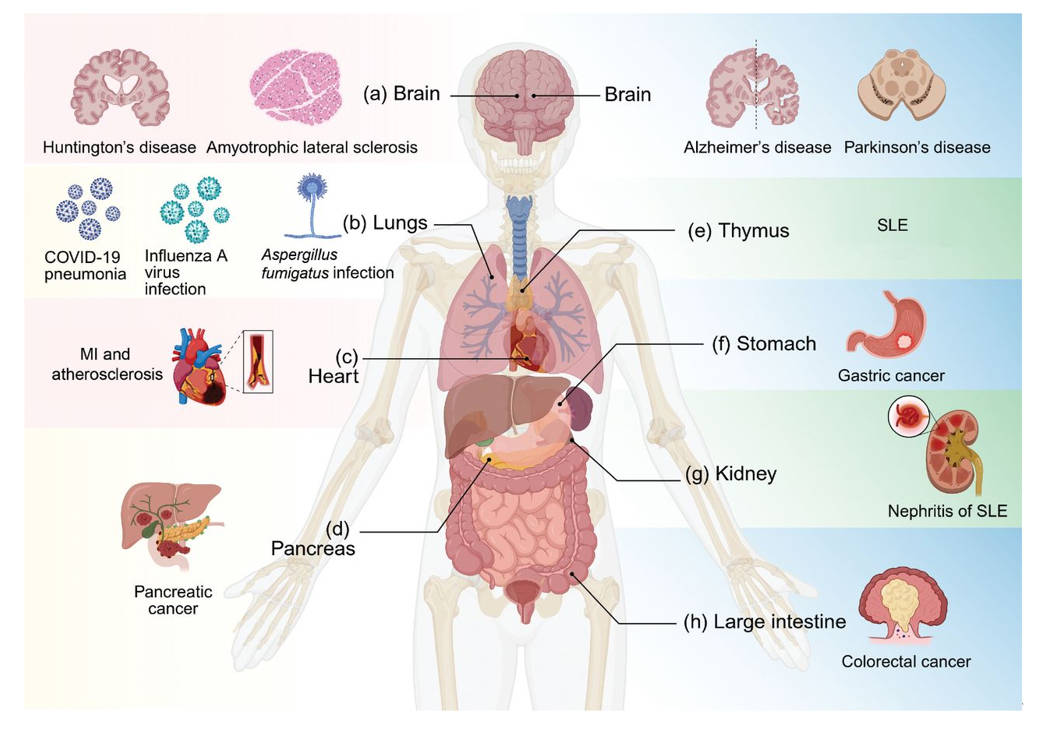

GA, UNITED STATES, October 19, 2026 /EINPresswire.com/ — PANoptosis is an integrated form of programmed cell death (PCD) that combines features of pyroptosis, apoptosis and necroptosis. This review examines how the PANoptosome—a multiprotein platform built from sensor, adaptor and catalytic components—coordinates these death programs. It surveys five known PANoptosome types, their signaling preferences and the mitochondrial and inflammatory signals that shape their activation. It also assesses PANoptosis in infectious, autoimmune, neurodegenerative, cardiovascular and neoplastic diseases, and evaluates small-molecule inhibitors, nanomedicines and combination therapies designed to suppress or induce the pathway. Overall, PANoptosis is a promising but challenging target for precision medicine.
Programmed cell death is essential for tissue homeostasis, host defense and clearance of damaged cells. Pyroptosis, apoptosis and necroptosis were long viewed as separate pathways, yet recent evidence reveals extensive crosstalk. Many pathogens and inflammatory triggers activate mixed death signatures, and blocking one executioner can push cells toward another, limiting single-target therapies. PANoptosis was proposed to explain this convergence, with assembly depending on the PANoptosome, a high-molecular-weight signaling complex. However, key questions remain about how different PANoptosomes are wired, how tissue context changes their output, and how they can be safely targeted. Given these challenges, deeper investigation into the mechanisms and translational applications of PANoptosis is urgently needed.
Researchers from The First Affiliated Hospital of Guangdong Pharmaceutical University, Guangdong Pharmaceutical University and Jiaying University have published (DOI: 10.20892/j.issn.2095-3941.2026.0012) a review in Cancer Biology & Medicine. The article examines PANoptosis and the PANoptosome, focusing on complexes nucleated by Z-DNA binding protein 1 (ZBP1), absent in melanoma 2 (AIM2), receptor-interacting serine/threonine-protein kinase 1 (RIPK1), NOD-like receptor family pyrin domain containing 12 (NLRP12) and NOD-like receptor family CARD domain containing 5 (NLRC5). It discusses infections, autoimmune disorders, neurodegenerative diseases, cardiovascular disease and cancer, plus emerging inhibitors, nanomedicines and combination therapies.
The review’s central advance is its framework for understanding PANoptosis as a “supercomplex” rather than coincidental activation of three pathways. It describes a sensor–adaptor–catalytic architecture: sensor proteins recognize pathogen-associated molecular patterns (PAMPs) or damage-associated molecular patterns (DAMPs); adaptors such as apoptosis-associated speck-like protein containing a CARD (ASC) and Fas-associated protein with death domain (FADD) bridge signals; and catalytic effectors including caspase-8, caspase-1 and receptor-interacting serine/threonine-protein kinase 3 (RIPK3) execute death. Five PANoptosomes are highlighted: ZBP1, AIM2, RIPK1, NLRP12 and NLRC5. Their signaling preferences differ. AIM2- and NLRP12-driven complexes favor pyroptosis through caspase-1/gasdermin D (GSDMD), while RIPK1- and NLRC5-driven complexes lean toward apoptosis and necroptosis. ZBP1 shows balanced activation. Mitochondria act as a central hub: mitochondrial outer membrane permeabilization, mitochondrial reactive oxygen species (mtROS) and mitochondrial DNA (mtDNA) release amplify PANoptosome assembly. The review also stresses context: tumor necrosis factor-alpha (TNF-α), interferon-gamma (IFN-γ), metabolic reprogramming and post-translational modifications can shift death outcomes. In cancer, acute PANoptosis may release DAMPs and boost antitumor immunity, whereas chronic low-level PANoptosis can fuel inflammation, immunosuppression and tumor progression.
The authors said the field is moving from description to design. They said PANoptosis helps explain why therapies that block only apoptosis, pyroptosis or necroptosis often disappoint, because tumor cells and infected cells can switch to another death route. They added that the PANoptosome is an attractive target because it sits upstream of this compensatory network, but they cautioned that broad activation could release large amounts of inflammatory DAMPs and cytokines. In their view, the next phase should focus on identifying robust biomarkers, mapping which PANoptosome dominates in each disease, and building delivery systems that act locally rather than systemically.
Clinically, the review points to two opposing strategies. In inflammatory, autoimmune, neurodegenerative and cardiovascular diseases, researchers aim to dampen PANoptosis to protect tissues. In cancer, the goal is often to induce PANoptosis, especially in tumors that evade apoptosis. Small-molecule inhibitors targeting NOD-like receptor protein 3 (NLRP3), RIPK1, ZBP1 or caspases are in preclinical or early clinical testing, while nanomedicines and combination regimens—including immune checkpoint inhibitors (ICIs), photodynamic therapy (PDT) and oncolytic viruses—are being explored to improve precision and reduce toxicity. The authors emphasize that no validated PANoptosis biomarker yet exists, so clinical translation will require better detection tools, patient stratification and rigorous safety studies. If these hurdles are overcome, PANoptosis could become a new therapeutic axis for infectious, inflammatory and malignant diseases.
References
DOI
10.20892/j.issn.2095-3941.2026.0012
Original Source URL
https://doi.org/10.20892/j.issn.2095-3941.2026.0012
Funding information
This work was supported by the Innovation Team Project in Regular Colleges and Universities of Guangdong Province [natural science] (Grant No. 2023KCXTD021), the Natural Science Foundation of Guangdong Province (Grant No. 2025A1515010265), the Medical Science and Technology Research Foundation of Guangdong Province (Grant No. A2024066), and the Characteristic Innovation Project of General Colleges and Universities in Guangdong Province (Grant No. 2025KTSCX060).
Lucy Wang
BioDesign Research
Legal Disclaimer:
EIN Presswire provides this news content “as is” without warranty of any kind. We do not accept any responsibility or liability
for the accuracy, content, images, videos, licenses, completeness, legality, or reliability of the information contained in this
article. If you have any complaints or copyright issues related to this article, kindly contact the author above.

Media gallery


