Standard Electric Car BMS Factory Development: Insights from IATF16949 Certified Qualtech
HANGZHOU, ZHEJIANG, CHINA, August 18, 2026 /EINPresswire.com/ -- When automotive engineers map out the production
Press Release Disclaimer: This is a press release distributed through the XPR Media network. It has not been independently verified by our newsroom.
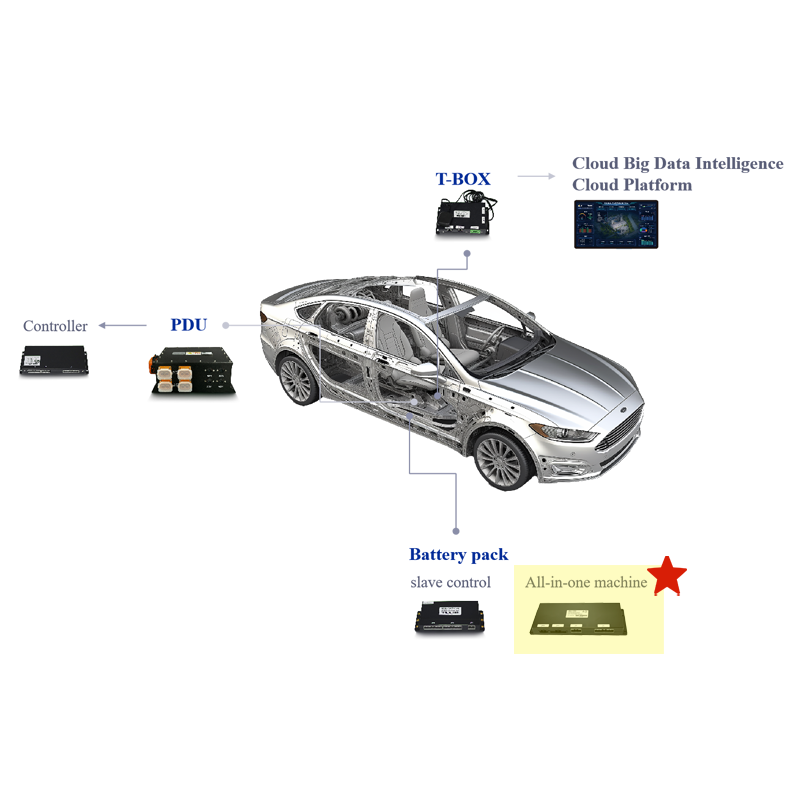

HANGZHOU, ZHEJIANG, CHINA, August 18, 2026 /EINPresswire.com/ — When automotive engineers map out the production lifecycle of modern electric vehicles, the conversation almost always shifts from raw cell chemistry to the intelligence governing the pack. In the early days of electrification, many vehicle platforms relied on outsourced, general-purpose battery protection boards adapted from industrial applications. However, as vehicle platforms transitioned toward higher safety integrity levels, rigorous failure mode effects analysis, and component-level manufacturing traceability, the automotive supply chain witnessed a fundamental shift. This shift gave rise to the Standard Electric Car BMS Factory—a specialized manufacturing and development blueprint governed strictly by the IATF 16949 automotive quality management system.
At the center of this industrial transition in China is Zhejiang Qualtech Co., Ltd., a specialized “little giant” enterprise established in 2011. With a cumulative shipments exceeding 3 million sets in the electric vehicle and energy storage sectors, the journey of Qualtech offers a practical case study in how a dedicated electric car bms factory matures to meet modern automotive standards.
The IATF 16949 Certification Blueprint
For any manufacturer aiming to supply core electronics to the automotive sector, obtaining IATF 16949 certification is not a mere compliance checkbox; it represents a complete overhaul of operational philosophy. Traditional industrial-grade electronics factories often operate under standard ISO 9001 frameworks, which focus primarily on general quality management systems. In contrast, an authentic electric car bms factory integrates advanced product quality planning, production part approval processes, statistical process control, and measurement systems analysis directly into every phase of production.
At its Hangzhou headquarters and manufacturing facilities, Qualtech has structured its operations around these rigorous automotive standards, maintaining compliance across ISO 9001, ISO 14001, and ISO 45001, while actively advancing its ISO 26262 functional safety implementation. This structural framework ensures that potential risks are mitigated long before a component reaches the assembly line. To sustain this intensive compliance ecosystem, the enterprise maintains an R&D team that accounts for more than 50% of its total workforce. By allocating over 10% of its annual revenue back into research and development, the company has secured more than 130 intellectual property rights and established joint research institutes with prominent universities, anchoring its manufacturing processes in verifiable engineering data.
Balancing Hardware Precision and Functional Safety Lifecycle
A robust electric car bms requires more than high-quality components; it demands a closed-loop development process that bridges hardware architecture with complex software algorithms. Within the automotive framework, development cannot proceed through simple hardware prototyping. Instead, it follows a structured lifecycle involving Failure Mode and Effects Analysis, Fault Tree Analysis modeling and simulation, and deep software calibration.
The product architecture developed by Zhejiang Qualtech Co., Ltd. illustrates this approach. Its electric vehicle portfolio features a distributed system comprising a master control unit, known as the battery management unit, alongside multiple slave control units. This hardware configuration is explicitly engineered to handle high-voltage environments while satisfying strict automotive safety integrity level constraints. During the initial development phases, engineers utilize simulation models to calibrate state-of-charge and state-of-health algorithms under varying thermal and structural loads. These systems then undergo joint debugging sessions with the vehicle control unit and controller area network protocols. This co-development process ensures that the battery management hardware communicates seamlessly with the central vehicle architecture, preventing signal latency and optimizing real-time thermal management.
Realizing Full Traceability on the Factory Floor
The true maturity of a standard electric car bms factory is reflected in its manufacturing execution system. On the production floor, precision hardware is required to eliminate human error and guarantee structural uniformity across large production volumes. At the Hangzhou manufacturing base of Qualtech, the high-speed surface mount technology lines are equipped with automated Panasonic chip mounters, solder paste inspection systems, 3D automated optical inspection units, and industrial X-ray machines.
However, the hardware is only as effective as the software tracking it. The integrates manufacturing execution system records every single board serial number, component batch number, and reflow soldering temperature curve. This granular level of data tracking allows the factory to fulfill the strict traceability requirements demanded by modern automobile manufacturers. Every battery pack receives a unique digital archive, linking the specific battery management components back to their exact manufacturing conditions. To complement this high-precision electronics assembly, the company operates a second production facility in Deqing. This base focuses on high-voltage boxes, combiner cabinets, and comprehensive system integration, managed under the exact same quality control protocols. The dual-base manufacturing strategy allows for balanced production scheduling, ensuring stable supply continuity during peak market demands without compromising component quality.
Fleet Data and Algorithmic Refinement
The relationship between an electric car BMS factory and the vehicles it equips does not terminate at the shipping dock. In fact, field data serves as the ultimate validation tool for continuous hardware and software optimization. With over 3 million sets deployed across diverse operating environments, Qualtech has compiled a comprehensive field-failure mode database. These deployments include partnerships with major commercial vehicle manufacturers such as FAW Jiefang, for whom Qualtech supplies BMS and high-voltage distribution units for battery-swap heavy truck platforms. Battery-swap heavy trucks operate under demanding duty cycles — frequent high-rate charging during short swap intervals, sustained vibration from loaded hauling on uneven road surfaces, and continuous uptime requirements across multi-shift operations — all of which generate real-world stress data that feeds directly back into Qualtech’s BMS design refinements.
This vast repository of real-world operational data acts as a continuous feedback loop. By analyzing long-term battery behavior in the field, engineers can refine software algorithms to correct state-of-charge drifting—a common technical issue where the estimated battery capacity deviates from the actual physical state over extended use cycles. Furthermore, this data feedback enables predictive maintenance capabilities, such as high-precision relay adhesion forecasting, which identifies potential mechanical welding or wear in the high-voltage contactors before a critical fault occurs. This empirical approach to refinement supports the company’s comprehensive original equipment manufacturer manufacturing services. By working alongside energy enterprises and public listed corporations, the enterprise continuously adapts its 4S+C core control systems to meet the practical demands of heavy-duty commercial vehicles, passenger cars, and electric vessels alike. These include partnerships with OEMs such as Lingong Group, where Qualtech supplies BMS platforms for electric loader applications — a category that subjects battery systems to sustained high-torque loads, frequent direction reversals, and extended low-speed operation in confined worksites. These distinct operating patterns generate field data that enriches Qualtech’s algorithm training sets, strengthening the same feedback loop that drives continuous improvement across the company’s entire BMS portfolio.
To learn more about customized battery management system specifications, development lifecycles, or technical documentation, contact Qualtech’s engineering team to request a product brochure or schedule a technical consultation. Visit https://www.qualtechenergy.com/ for more information.
ZheJiang Qualtech Co.,Ltd.
ZheJiang Qualtech Co.,Ltd.
+ + +86 15013692485
email us here
Visit us on social media:
LinkedIn
Facebook
TikTok
X
Legal Disclaimer:
EIN Presswire provides this news content “as is” without warranty of any kind. We do not accept any responsibility or liability
for the accuracy, content, images, videos, licenses, completeness, legality, or reliability of the information contained in this
article. If you have any complaints or copyright issues related to this article, kindly contact the author above.

Media gallery